Formula 1
Why Pit Stop Timing Decides More Races Than Overtaking
Track position is difficult to change on circuit, so strategy teams contest positions through pit windows and tyre offsets rather than through wheel-to-wheel passing.
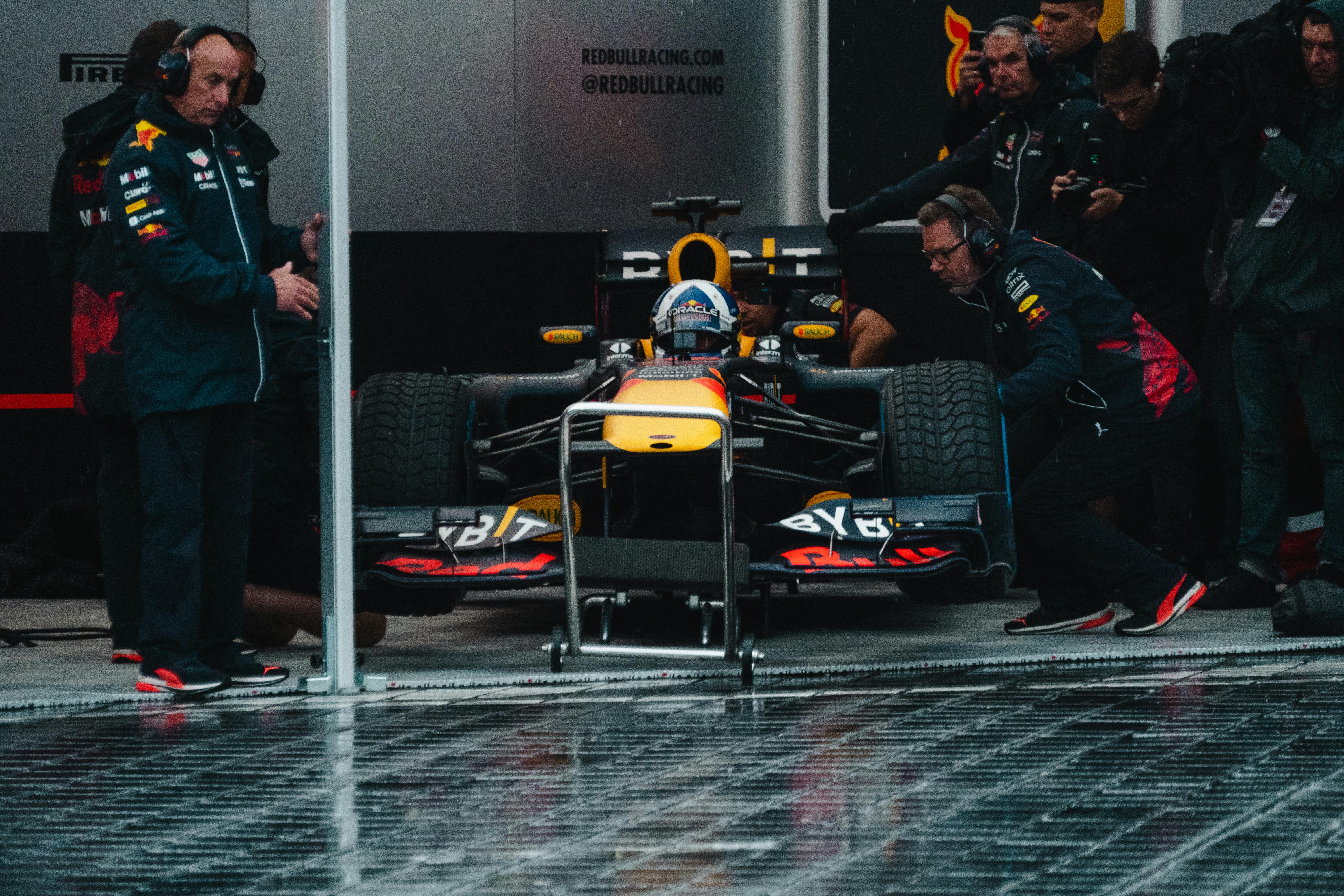
Modern grand prix racing is decided more often in the strategy room than on the racing line. The reason is that overtaking on track is expensive and unreliable, while a pit stop is precise.
Following closely costs performance
Cars generate downforce from airflow over their bodywork, and running in the turbulent wake of another car disrupts that flow.
The following car therefore has less grip in corners, which makes staying close through a sequence of turns physically harder rather than merely difficult.
Regulations have been rewritten to reduce this effect, but a car ahead retains an aerodynamic advantage that limits how often a genuine passing opportunity appears.
The undercut converts pace into position
A car pitting earlier than the one ahead rejoins on fresh tyres while the rival continues on worn ones, and the lap time difference is substantial.
Over the following laps that advantage can be enough to emerge ahead when the rival eventually stops, without the two cars ever racing each other directly.
Defending against it requires stopping immediately in response, which is why teams monitor rivals' pit lane activity as closely as their lap times.
The overcut works when tyres behave differently
Staying out longer can also gain position, if the rival's fresh tyres take time to reach working temperature or if traffic compromises their out-lap.
This depends on circuit and compound. A track with long corners that heat tyres quickly favours the undercut, while a cold surface can favour staying out.
Teams model both continuously during the race, updating the calculation as degradation data arrives from their own car and from rivals.
Pit lane time is a fixed cost that shapes everything
Every stop costs the time spent travelling the pit lane at the limited speed plus the stationary time, and that total varies considerably between circuits.
Where the cost is high, a one-stop strategy becomes strongly preferable and teams manage tyres to make it viable.
Where it is low, additional stops become affordable and races feature more strategic variation, since the penalty for a reactive stop is smaller.
Safety cars invalidate the plan instantly
A neutralised race compresses the field and reduces the effective cost of a pit stop, because the cars ahead are also travelling slowly.
A team that has already stopped loses the benefit, while one that has not receives a nearly free stop, which can reverse positions built over many laps.
Strategists therefore weigh the probability of an interruption at each circuit, and a track with limited run-off and a history of stoppages changes the calculation from the first lap.


